Swimming with pigs in crystalline Bahamian waters has exploded into one of the most recognized bucket-list wildlife experiences on the planet. Yet international travel forums and social media are rife with confusion regarding where these famous animals actually live.
Many travelers arrive in Nassau believing that all swimming pigs are wild, feral creatures roaming an untouched desert island. Others book grueling, four-hour open-ocean powerboat runs to the Exuma Cays without realizing that a thriving, comfortable, and veterinarian-monitored herd lives just 25 minutes from Nassau on Rose Island.
I spend every week out on these waters. Here is the unvarnished reality: the origins of Rose Island’s pigs, how the interactions actually work, crucial surf-zone hygiene rules, and how to choose between Rose Island and Big Major Cay.
Rose Island Swimming Pigs: Key Insights (TL;DR)
- Domesticated, Not Feral: Rose Island’s pigs are domesticated farm animals brought to the island specifically for commercial tourism. They sleep in clean, shaded inland paddocks and are released onto the beach only when excursion boats arrive.
- Calm, Sheltered Boat Transit: Rose Island is located only 6 to 8 miles east of Nassau Harbour (a smooth 25-minute catamaran ride). By contrast, Big Major Cay in Exuma is 89 miles away, requiring 4 hours of brutal open-ocean pounding that leaves many passengers bruised or seasick.
- Food-Motivated Interactions: Handlers give guests cups of carrots on wooden sticks or kibble to coax the pigs into waist-deep water. When the food runs out, the pigs naturally wander back to the shade.
- Surf Zone Hygiene Rule: Pigs defecate in the warm, shallow surf zone during feeding sessions. If you have fresh cuts, scratches, or compromised skin, stay on the dry sand, and always use antibacterial wipes or take a freshwater shower immediately after.
- Cost Difference: Rose Island pig tours cost $79 to $258, whereas full-day Exuma powerboat charters cost $330 to $650 per adult.
The Real Story: Rose Island vs. Exuma (Big Major Cay)
Understanding the geographic and ecological distinction between these two destinations will save you hundreds of dollars and prevent major travel disappointment:
| Feature & Operational Factor | Rose Island Swimming Pigs (Nassau) | Big Major Cay (Exuma Cays) |
|---|---|---|
| Distance from Nassau | 6.0 to 8.0 miles (9.6 to 13 km) | 89.0 miles (143 km) |
| Boat Transit Time (One-Way) | 25 to 30 minutes (Sheltered harbour & bank) | 1.75 to 2.25 hours (Open Atlantic & Exuma Sound) |
| Typical Sea Conditions | Smooth, calm lagoon protected by reef | High-speed open-ocean slamming, heavy spray |
| Pig Origin & Lifestyle | Domesticated; sleep in shaded upland paddocks | Feral/semi-wild; live free on the island interior |
| Veterinary Oversight | Regular private veterinary inspections & diets | Periodic government & charitable vet care |
| Excursion Ticket Prices | $79 to $258 | $330 to $650 |
| Suitability for Cruise Guests | Ideal (Tours run 3.5 to 6 hrs; fits port hours) | Risky (Requires 8 to 9 hrs total; risks missing ship) |
| Ideal Traveler Profile | Families with kids, seniors, cruise passengers | Adventure seekers with full days & strong sea legs |
The Truth About the “Knockoff” Debate
On travel discussion boards like Reddit (r/bahamas), you will occasionally find harsh reviews dismissing Rose Island’s pigs as an “engineered tourist trap” or a “commercial knockoff.”
Their factual critique is accurate: the pigs were brought to Rose Island in the late 2010s to capitalize on the Exuma craze. They do not live a wild Robinson Crusoe lifestyle; they are working farm animals managed by beach club staff.
However, for 90% of real-world travelers—especially families with young children, elderly grandparents, or cruise passengers with just 7 hours in port—Rose Island is demonstrably the superior choice. The 89-mile run to Big Major Cay involves hours of jarring hull impacts that can be physically painful for anyone with back issues, whereas Rose Island delivers delightful photos, pristine beach lounging, and playful pigs in a gentle 25-minute harbor cruise.
How the Interaction Works: Food, Photos & Safety
When your boat docks at Sandy Toes, Da Pig Beach, or Sand Dollar Beach Resort, the wildlife encounter follows a carefully coordinated sequence designed for guest and animal safety:
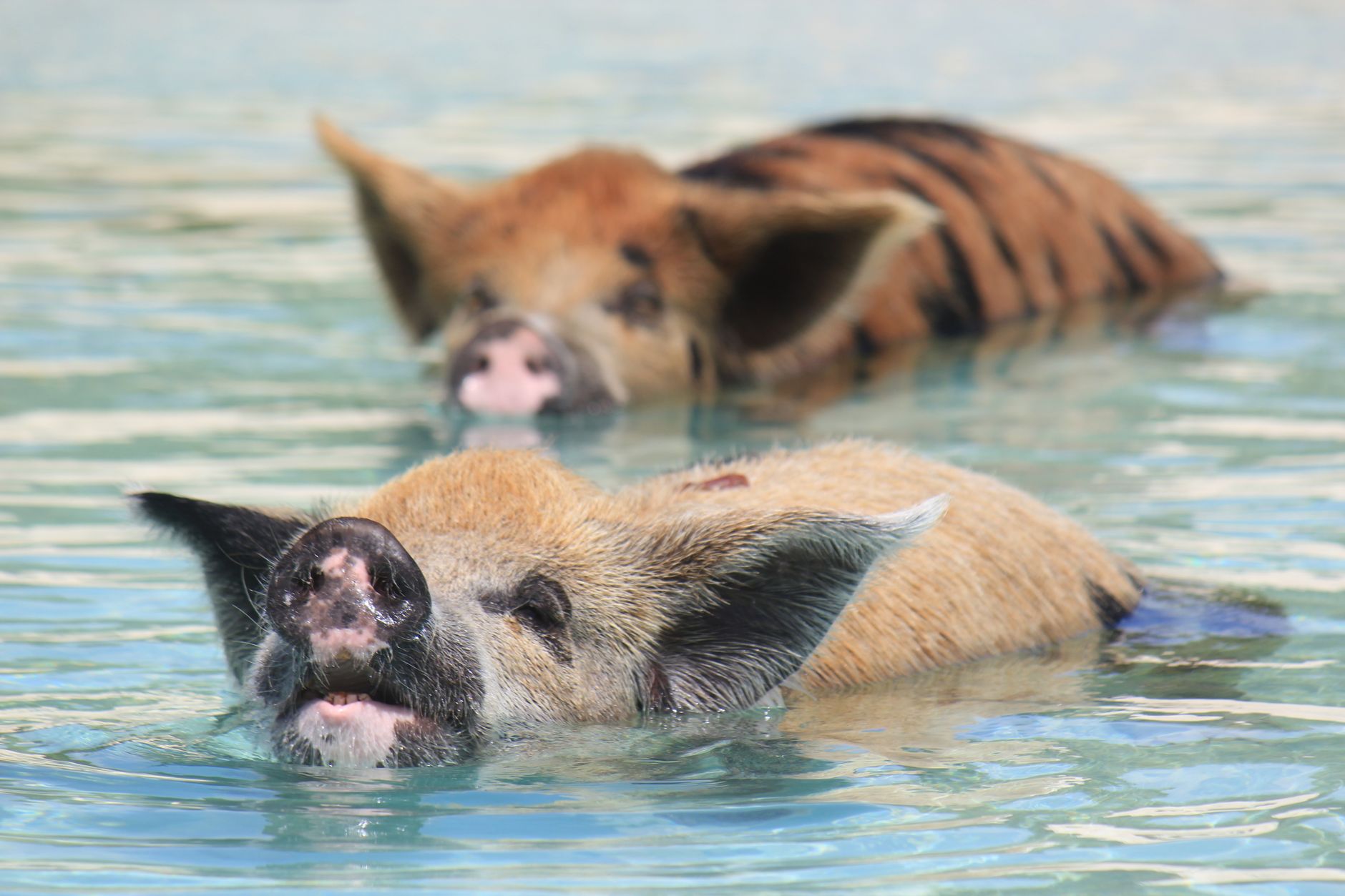
1. The Paddock Release
The pigs reside in upland, fenced paddocks shaded by sea grape trees and Australian casuarina pines, equipped with freshwater troughs and mud wallows. When a tour group finishes settling in, handlers open the paddock gates. The pigs, knowing food awaits, trot enthusiastically down the sandy trails toward the waterline.
2. The Human Barrier Line
Guides instruct guests to enter waist-deep water (2 to 3 feet / 0.6 to 0.9 m) and form a broad line in the surf. This human barrier keeps the pigs from swimming into deep shipping channels or wandering miles down the public beach.
3. Food Motivation & Feeding Technique
Handlers distribute cups of sliced carrots pierced onto wooden skewers, or small bowls of grain kibble.
- Always Hold the Skewer Firmly: Hold the skewer out toward the pig’s snout. Pigs have poor eyesight in bright water and rely on their keen sense of smell. Never hold loose food in your open palm, as an eager 200-pound pig might accidentally pinch your fingers.
- Keep Empty Hands Raised: When your carrots are finished, show the pig both empty hands with open palms raised. The pigs recognize this gesture and will promptly turn away to look for another skewer.
- Never Tease the Animals: Holding food high out of reach prompts adult pigs to rear up on their hind legs and place heavy hooves on your shoulders, which can scratch bare skin.
4. Handling Piglets
At venues like Da Pig Beach, staff maintain separate shallow nursery pens for baby piglets. Guests can gently scoop up piglets with both hands supporting their belly and chest for photographs, provided the handlers supervise the interaction.
Surf Zone Hygiene: What Every Parent and Swimmer Must Know
Tour brochures rarely mention this, but transparent journalism demands honesty: pigs defecate in the water during feeding sessions.
When dozens of pigs wade through the warm, shallow surf zone eating carrots and bread, biological waste enters the immediate waterline. While tidal currents flush the shoreline continuously, bacterial concentrations in the immediate 50-foot feeding pocket rise significantly during midday sessions.
Mandatory Hygiene Protocols
- Never Enter with Open Cuts or Scratches: If you have fresh coral scrapes, razor nicks, blisters, or open cuts, do not wade into the pig feeding zone. Staph infections from warm marine bacteria can develop quickly. Stay on the dry sand and photograph the pigs from the beach.
- Do Not Ingest the Water: Keep your face out of the water in the immediate pig zone. Never submerge your head, snorkel mask, or mouth where pigs are swimming.
- Bring Disinfectant Hand Wipes: Pack a travel pouch of antibacterial wet wipes or alcohol sanitizer. Thoroughly cleanse your hands immediately after touching the pigs, especially before eating lunch or handling drinks.
- Use Freshwater Showers Immediately: Both Sandy Toes and Sand Dollar provide freshwater rinse showers. Head directly to the showers when the feeding session ends to rinse salt and bacteria from your skin and swimwear.
Which Rose Island Pig Tour Should You Choose?
Frequently Asked Questions Regarding the Swimming Pigs
Do the pigs on Rose Island bite?
Are the pigs treated humanely on Rose Island?
Can non-swimmers and small children participate?
Do the pigs swim all day long?
Book Your Rose Island Swimming Pigs Encounter
Choose between all-inclusive day passes, budget express water taxis, and small-group speedboats with guaranteed on-time cruise port return.
Compare Swimming Pig Tour Options →Ready to Experience Rose Island Bahamas?
Book a verified day excursion covering the swimming pigs, barrier reef snorkeling, and beach club relaxation with guaranteed on-time return to Nassau Cruise Port.